Hakan Bengtsson
Let the Right One InHakan Bengtsson is a forty-five-year-old drifter who becomes Eli’s helper, finding victims and securing the fresh blood she needs. His role joins deliberate planning to visible unease: he can prepare an attack and carry it through, yet he also pauses over the people in his hands and imagines that he could still turn back. The contrast between service and hesitation defines his part in the novel, while his eventual hospitalization makes the cost of that service literal and erases the identity he meant to conceal.
Identity and Arrival
When Hakan first appears, he is sitting on the subway and looking toward what will become his new home. The account gives him an incipient beer belly, a receding hairline, and no address known to the authorities. He judges the western suburbs as somewhat ugly, but unlike the places he has seen on television, they do not resemble the notorious Stockholm-area housing districts he expects. His arrival at Råcksta begins a life in a setting that is unfamiliar but, for his purposes, close enough to Eli.
Hakan’s lack of a traceable address is more than a biographical detail: it helps establish the precarious, partly hidden existence from which he enters Eli’s service. The narrative does not provide a full account of his earlier life or explain how he came to be without a known address. Instead, it shows a man who has been drinking heavily and whose days have brought him into public view in disreputable ways. His later anonymity in a hospital bed echoes that earlier lack of a secure place in the world, though by then concealment is no longer his choice.
From Drinking to Service
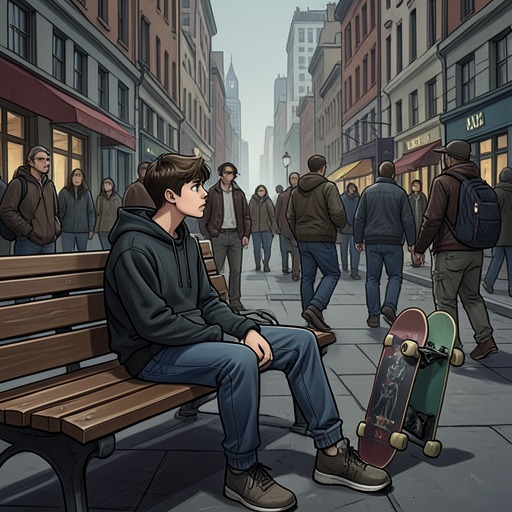
The account of Hakan’s bond with Eli begins on an evening when he is drunk on a bench beside a playground, with a bottle in a plastic bag. He touches Eli’s thigh; she moves his hand away, takes the bottle, pours out the wine, and tells him that he will stop drinking, help her, and be with her. She also says that she needs him and will help him. Hakan takes her offered hand, and they walk away together. The narrative makes the change concrete: he stops drinking and enters her service.
That encounter establishes an unusual bond of dependence. Eli gives Hakan a purpose and a place beside her, while he becomes responsible for supplying what she needs to live. The arrangement is intimate but unequal in its demands: Hakan’s actions are organized around Eli’s need for blood, and the later scenes show the practical and moral burden of meeting it. The evidence does not present a simple account of his motives; it shows the promise of belonging, the work he undertakes, and the moments when he registers what that work means for another person.
Methods and Hesitation
Hakan’s assistance depends on preparation and timing. In the forest near Blackeberg, he chooses a position from which he can watch a path in both directions and leaves a bag of equipment in a sheltered hollow. He carries a small halothane canister under his coat and waits. The scene presents the attack not as an impulsive act but as a procedure: he chooses a place, prepares his equipment, and watches for an opportunity.
His search for victims is shaped by Eli’s dependence on fresh blood. On one evening he wanders around Nya Elementar and the Vällingby mall, where young people gather and sports activities are underway. Potential victims are present, but many move in groups, making an attack difficult. He considers going farther away, then weighs the risk that the blood might spoil on the way home. He wants the supply to be fresh and near, in keeping with what he has been told. A ski mask draws little notice in the freezing weather, but he knows he cannot continue moving around the area indefinitely without attracting suspicion.
At a changing room, Hakan drags a boy inside and locks the door. He uses the gas canister, aware that its hiss could draw attention, and knows he must work quickly. He has been told that the blood must come from a living person: blood from the dead is useless and may be harmful. This rule explains why his method is not simply to kill first and take what remains; the victim must be alive when he begins. The scene exposes the central cruelty of his task without making him indifferent to it.
After carrying the unconscious boy to the hollow, Hakan lies beside him, studies his face, touches him, and holds him close. He kisses the boy on the cheek, asks forgiveness, and gets up. Tears threaten, and he recognizes that he could still refrain. The contrast is stark: he has already carried out the practical stages of the plan, yet the boy’s vulnerability brings the choice back before him. The narrative records that hesitation without claiming that it cancels his responsibility or changes the outcome.
Exposure and Erasure
Elsewhere, Hakan comes upon a dead man beneath the underpass. Eli’s thin pink sweater, usually worn by her, has been left on the man’s chest. Hakan picks it up, then stops when he feels that it is sticky and drops it back. He drinks from his hip flask and sits beside the body, troubled by something he sees in the man’s head. The scene places him close to the aftermath of violence and links the dead man to Eli through the discarded sweater, but it does not establish Hakan’s precise role in that death. His reaction is one of shock and distress rather than explanation.
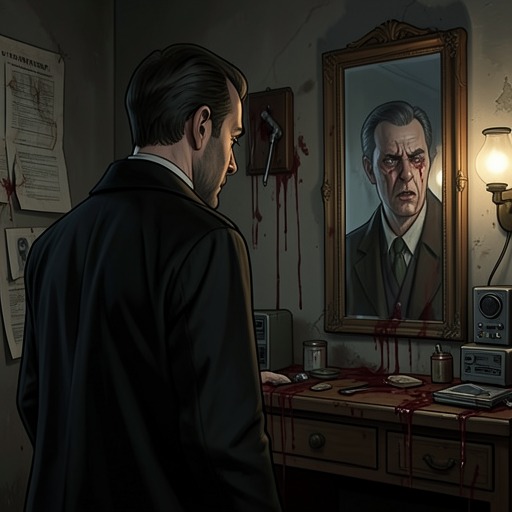
The consequences of the violence eventually reach Hakan himself. After operations and periods of anesthesia, he wakes in a hospital, unsure how many days have passed. His face is covered by a rubberlike bandage; feeling its contours with his one responsive hand, he concludes that he no longer has a face. The account does not identify the cause of his condition in this passage. It does make the consequences of his changed appearance clear: Hakan Bengtsson can no longer be recognized, and the hospital holds an unidentified body. Authorities may connect him to the murders, but not to his earlier life or his present connection to Eli.
Narrative Role
Hakan’s scenes make the costs of Eli’s survival visible through the person who supplies her blood. His preparation, concern for freshness, and attention to avoiding notice show how a supernatural need becomes a repeated, practical operation in ordinary places: a school changing room, a shopping area, a path through the woods. The ordinary details do not soften the violence; they show how methodically it is fitted into everyday surroundings.
At the same time, the pauses in Hakan’s actions resist reducing him to a mere instrument. His tender gesture toward the unconscious boy, his request for forgiveness, and his awareness that he could still stop reveal a conflict between attachment to Eli and recognition of the people harmed in her name. The novel leaves that conflict unresolved in the supplied scenes. Hakan continues to be defined by what he does for Eli, while the final image of his unidentified hospital body underscores the distance between the service he chose and the personal identity it ultimately costs him.